The central difference between a robot vacuum and a cordless stick vacuum is the cleaning workflow: a robot vacuum automates frequent, mostly hands-off floor cleaning, while a cordless stick vacuum is a manual tool you control for targeted, deeper, and more flexible cleaning. The better choice depends on your home and routines, and the evidence rarely supports a single dominant option across all situations.
This comparison stays at the level of the two categories named in the topic. Specific performance depends heavily on the exact model (suction power, brush design, navigation, battery capacity, dust-bin size, filtration, and whether it includes mopping). If you’re comparing particular products, those details can change the conclusion.
Quick comparison table (category-level, no model-specific guesses)
| What to compare | Robot vacuum | Cordless stick vacuum |
|---|---|---|
| Primary cleaning style | Autonomous, scheduled or on-demand floor runs | Manual, user-directed cleaning |
| Best for | Frequent maintenance cleaning on floors | Targeted cleaning, edges, stairs (if supported), and spot work |
| Obstacle handling | Varies by navigation; may need boundary/virtual-map setup | User can adapt instantly around furniture and clutter |
| Deep cleaning control | Limited by automation and coverage pattern | Higher control for corners, crevices, and problem areas |
| Maintenance burden | Emptying bin, cleaning brushes, and maintaining sensors/wheels | Emptying bin, cleaning filters/brushes, and battery care |
| Ongoing costs | Consumables vary (filters, brush wear parts); sometimes mop pads | Consumables vary (filters/brushes); battery replacement may be a factor over time |
| Learning curve | Setup and mapping can take time; routines reduce effort later | Generally straightforward; technique affects results |
Two different tools, two different jobs
Robot vacuum (what it is and how it’s used)
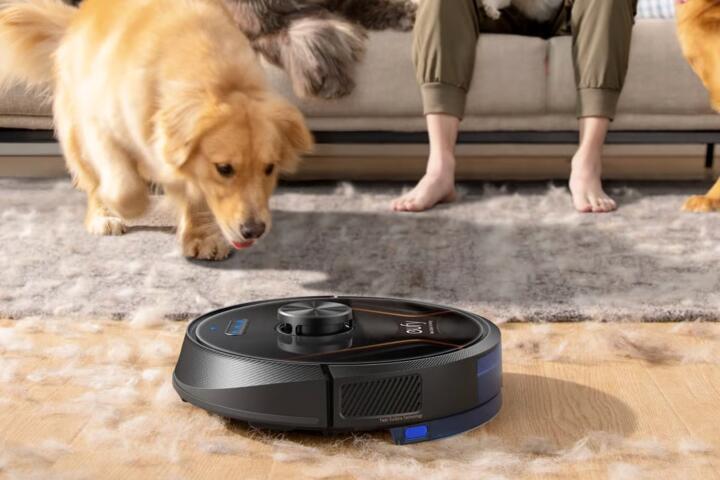
A robot vacuum is a self-propelled cleaner that navigates your home and cleans on a schedule or with app/remote control. In practice, it’s most effective when you treat it as a maintenance layer: frequent runs help prevent dust and debris from building up, which can reduce how often you need manual deep cleaning.
Many robot vacuums also include features such as obstacle detection, boundary controls (physical barriers or virtual boundaries), and sometimes mopping. However, performance can vary significantly depending on navigation method and how well the unit handles thresholds, dark rugs, cables, and clutter.
If you want a deeper look at how these systems behave in real homes, see our robot vacuum deep dive.
Cordless stick vacuum (what it is and how it’s used)
A cordless stick vacuum is a handheld/standing vacuum designed for manual cleaning without a cord. It’s typically used for quick cleanups, edge and corner work, and more thorough sessions where you can see exactly what you’re doing.
Stick vacuums vary widely in battery runtime, suction consistency, brush types (especially for carpets vs hard floors), and how easy it is to switch between floor heads and attachments. In many homes, it becomes the “main” vacuum because it can handle irregular messes and hard-to-reach areas more reliably than an automated unit.
For a category-focused guide to choosing and using one effectively, read our cordless stick vacuum review.
Criterion-by-criterion: what changes in real use
1) Daily usability and time savings
Measurable/practical difference: Robot vacuums can run while you’re busy, reducing the number of manual cleaning sessions. Cordless stick vacuums require you to push and maneuver the cleaner.
Why it matters: If you value consistent cleaning with minimal effort, automation can help you maintain cleaner floors more often. If you prefer to clean only when needed (or you have lots of irregular mess), manual control may fit better.
Who benefits: Robot vacuum: busy households, people who want routine maintenance, and homes where floors are mostly accessible. Cordless stick: anyone who needs frequent spot cleaning, has many obstacles, or wants to clean specific problem areas immediately.
Limits: Robot performance depends on navigation and floor layout. Stick vacuum results depend on technique, brush selection, and battery capacity.
2) Coverage and cleaning pattern
Measurable/practical difference: Robot vacuums clean via a programmed path and may miss or repeat areas depending on mapping and obstacle avoidance. Stick vacuums cover where you move them, including edges and corners you can see.
Why it matters: If your home has lots of furniture legs, tight spaces, or clutter, robot coverage can be inconsistent. If you have clear floor space and want broad, regular coverage, a robot can be compelling.
Who benefits: Robot vacuum: open-plan hard floors and consistent layouts. Cordless stick: homes with many corners, thresholds, and “known trouble spots.”
Limits: Without model-specific specs (navigation type, brush design, and obstacle handling), you can’t assume one will cover better.
3) Performance on different floor types
Measurable/practical difference: Robot vacuums may struggle with some carpet types, high-pile rugs, or transitions if the unit can’t maintain contact or traction. Stick vacuums can be more adaptable because you can choose the right head/brush and adjust your approach.
Why it matters: Homes with mixed flooring (hardwood + rugs + carpet) often need a tool that can handle transitions without losing pickup.
Who benefits: Robot vacuum: mostly hard floors or low-pile rugs (depending on the model). Cordless stick: mixed flooring, especially if you need strong agitation on carpets.
Limits: “Carpet performance” is highly model-dependent. Look for explicit manufacturer guidance about floor types and any stated limitations.
4) Obstacle handling and clutter tolerance
Measurable/practical difference: Robot vacuums must detect and avoid obstacles; they can get stuck or repeatedly reroute around items. Stick vacuums let you physically work around obstacles and can reach under/around items more intentionally.
Why it matters: If your home has lots of cables, chair legs, toys, or frequent clutter, you may spend time rescuing a robot or reconfiguring boundaries.
Who benefits: Robot vacuum: relatively tidy floors and predictable obstacle patterns. Cordless stick: clutter-prone homes, kids’ play areas, and spaces where you can’t easily “clear the path.”
Limits: Some robots handle obstacles better than others, but you need model-specific reviews and user reports.
5) Edge cleaning and hard-to-reach areas
Measurable/practical difference: Stick vacuums generally do better at edges, corners, baseboards, and stairs (if the model supports stair use and has appropriate attachments). Robot vacuums can improve edge coverage, but it’s still constrained by their movement and sensor logic.
Why it matters: Dust accumulation often shows up along baseboards and in corners—areas where manual control helps.
Who benefits: Cordless stick: households that care about detail cleaning and visible edges. Robot vacuum: people who prioritize overall floor maintenance over perfect corner work.
Limits: Some robot vacuums include edge-optimized brushes, but you still may need manual follow-up.
6) Maintenance and cleaning the cleaner
Measurable/practical difference: Robot vacuums require regular bin emptying and cleaning of brushes, wheels, and sensors. Stick vacuums require filter/brush maintenance and battery care; some models also need periodic cleaning of the floor head.
Why it matters: If maintenance is neglected, suction and pickup can drop for both categories. The difference is that robots add sensor/wheel upkeep, while stick vacuums add battery lifecycle considerations.
Who benefits: Robot vacuum: people willing to do periodic “clean the robot” tasks. Cordless stick: people comfortable with routine filter and brush upkeep.
Limits: Exact maintenance intervals vary by model and household conditions (pet hair, dust load).
7) Hidden ownership trade-offs (often overlooked)
- Robot vacuum: You may need to manage boundaries (virtual maps or physical barriers) and accept that some mess types (wet spills, large debris) are not ideal for automation.
- Cordless stick vacuum: Battery runtime can limit how much you can clean in one session, and battery replacement may become relevant as the pack ages.
- Both: Brush wear and filter condition can materially affect performance over time; consumables can add cost.
8) Charging and downtime
Measurable/practical difference: Robot vacuums typically return to a dock for charging, which can reduce downtime. Stick vacuums require you to charge the battery between uses; runtime constraints can interrupt longer cleaning sessions.
Why it matters: If you need to clean large areas in one go, stick vacuum battery limitations may be more noticeable. If you prefer frequent short runs, robot charging cycles can fit naturally.
Who benefits: Robot vacuum: homes where daily/near-daily maintenance is the goal. Cordless stick: homes where you clean in planned sessions and can manage charging.
Limits: Runtime and charging behavior are model-specific; check manufacturer documentation for battery and charging details.
9) Allergen and filtration considerations
Measurable/practical difference: Both categories can include filtration systems, but the effectiveness depends on the filter type and how well the system seals during operation.
Why it matters: If you’re sensitive to dust, you’ll want to ensure the vacuum’s filtration approach is appropriate and that maintenance (filter cleaning/replacement) is practical.
Who benefits: Either option can work, but the best fit depends on your tolerance for maintenance and the specific filtration design.
Limits: Without model-specific filtration specs and guidance, you can’t compare allergen performance reliably.
10) Cost of ownership (what you can estimate without guessing)
Measurable/practical difference: Robot vacuums may add costs for brush/sensor upkeep and potentially mop consumables (if included). Stick vacuums may add costs for battery replacement over the long term and replacement filters/brushes.
Why it matters: The “cheapest upfront” option can become more expensive if consumables or battery replacement are frequent.
Who benefits: Budget-focused buyers: compare total expected consumables and the availability/cost of replacement parts for the specific models you’re considering.
Limits: Without model pricing and part availability, you can only compare categories at a high level.
When the usual recommendation reverses
Many people assume robots are always for “easy homes” and stick vacuums are always for “serious cleaning.” That’s not always true.
- Robot vacuum may be the better primary tool if your home layout is consistent, floors are mostly accessible, and you benefit from frequent maintenance (for example, reducing visible dust between manual cleanings). In that case, a stick vacuum can become the occasional “detail and deep clean” tool.
- Cordless stick vacuum may be the better primary tool if you have frequent clutter, lots of obstacles, or mess types that require immediate targeted cleanup. If you often need to clean up after meals, crafts, or kids/pets, manual control can outperform automation.
- Mixed strategy can be optimal when you want both: robot vacuum for routine floor maintenance and stick vacuum for edges, stairs, and problem areas. This isn’t a universal rule, but it often matches how real households clean.
Questions to answer before you choose
- What’s your floor mix? Mostly hard floors, mostly carpet, or a mix with rugs and transitions?
- How cluttered are your floors during the week? If you can’t keep paths clear, automation may require more intervention.
- Do you need edge/corner perfection? If yes, plan for manual follow-up with a stick vacuum.
- How long are your typical cleaning sessions? Stick vacuum runtime may constrain longer sessions; robots may fit better with shorter, frequent runs.
- What maintenance are you willing to do? Robots add sensor/wheel/brush upkeep; stick vacuums add battery and filter/brush care.
- Do you have pets or shedding? This affects brush design needs and how often you’ll empty/clean.
- Are you open to setup? Robots often require initial mapping/boundary setup; stick vacuums usually do not.
Ownership approach: one tool vs two
Some buyers want a single “main” cleaner; others prefer a two-tool system. If you’re unsure, consider the workflow you’ll actually follow:
- If you’ll run a robot consistently (daily or near-daily), it can reduce how often you need to do full manual vacuuming.
- If you only vacuum when you notice a mess, a stick vacuum may be more reliable because you can respond immediately and clean precisely.
- If you’re willing to do both, you can use each tool where it’s strongest: robot for routine coverage, stick for targeted cleanup.
Technical explainer: why navigation and brush design matter
Robot vacuum results can hinge on how it navigates and how its brush system interacts with your floor type. For a deeper technical perspective on what to look for (without getting lost in marketing terms), see our navigation and brush-design explainer.
Conditional verdicts (choose based on your profile)
- Best for routine maintenance and low-effort daily cleaning: Robot vacuum, if your layout is manageable and you’ll let it run regularly.
- Best for targeted cleaning, edges, and irregular mess: Cordless stick vacuum, especially if you need control and fast response.
- Best for homes with lots of obstacles/clutter: Cordless stick vacuum (or a robot only if you’re willing to manage boundaries and clear paths).
- Best for mixed-floor homes where you care about carpet agitation: Cordless stick vacuum is often the safer bet, with a robot as supplemental maintenance if it’s compatible with your rugs.
- Best for simplicity of “grab and clean”: Cordless stick vacuum (generally less setup than a robot).
- Best for low running effort (not necessarily lowest cost): Robot vacuum, if you accept periodic cleaning of the robot and bin maintenance.
If you tell us your floor types (hard floors vs carpet/rugs), pets, and whether you prefer daily maintenance or occasional deep cleans, you can narrow the choice quickly. For model-specific guidance, start with the category deep dives: robot vacuum deep dive and cordless stick vacuum review.